
A receding hairline in men is a common early sign of androgenetic alopecia (male pattern baldness). It typically begins with thinning at the temples, forming an “M” shape. Driven by DHT sensitivity, it progresses over time. Treatments include minoxidil, finasteride, PRP, and hair transplants.
Dr. Hair offers advanced hair loss treatment in Malaysia, including PRP hair treatment and exosome hair therapy, to stimulate hair growth, strengthen follicles, and support healthier, fuller hair.
Understanding Receding Hairline
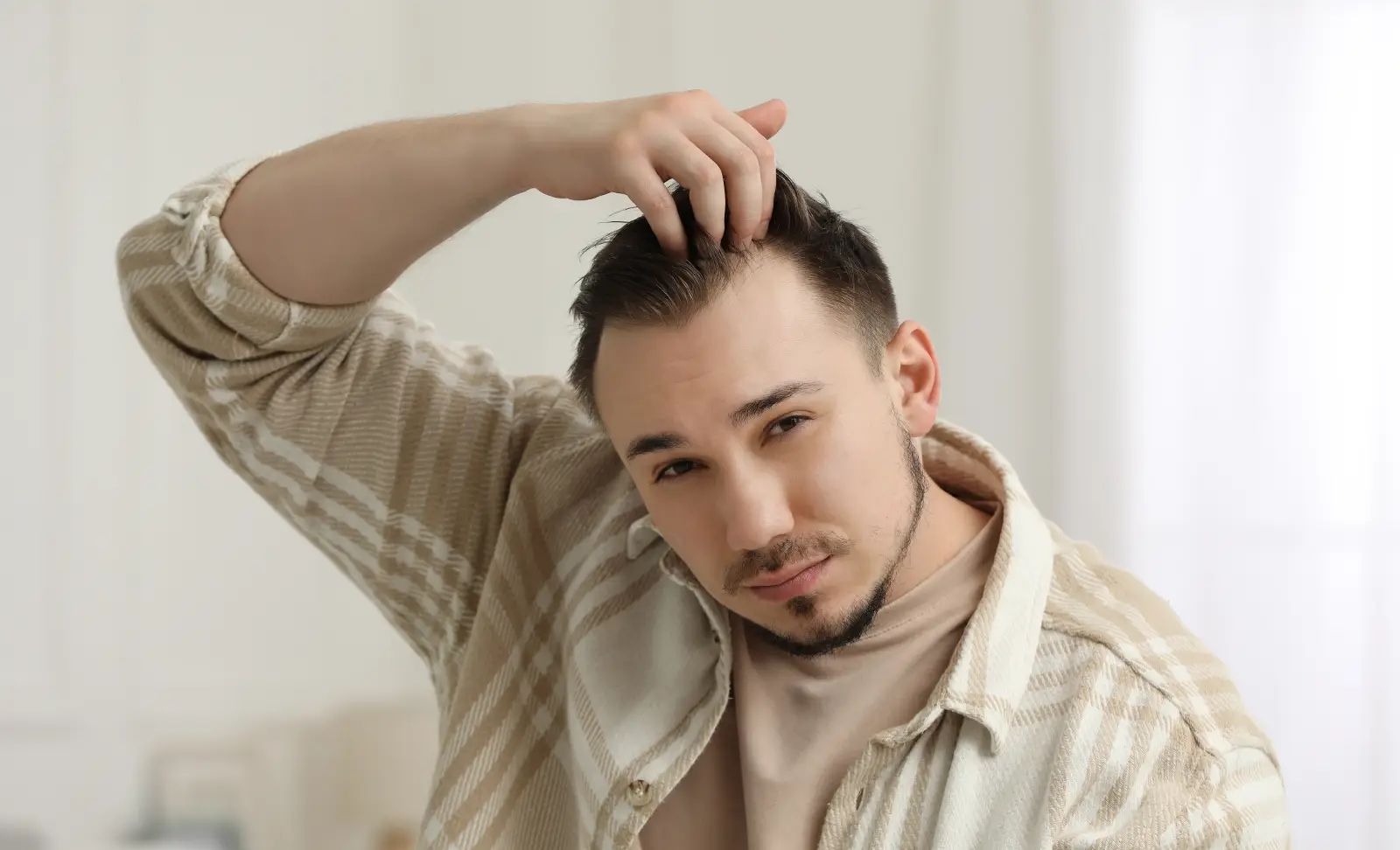
Before you start googling “how to hide a big forehead,” it helps to understand what’s actually happening on your scalp.
What Is a Receding Hairline?
A receding hairline is the gradual retreat of the hairline from its natural position, often starting at the temples. It is most commonly caused by androgenetic alopecia (pattern baldness) due to DHT sensitivity. Early intervention with minoxidil, finasteride, or PRP can slow progression.
How It Differs from General Hair Thinning
While general thinning affects the density of hair across the entire scalp (making it look “see-through”), a receding hairline is localized. You might have thick hair at the back but notice the corners of your forehead are creeping toward the crown.
Common Patterns of Receding Hairline in Men
Most men follow the “M-shape” pattern. This is where the temples recede faster than the center, creating a distinct peak. As it progresses, it may evolve into a “U” or “V” shape as the front section thins out.
Causes of Receding Hairline in Men
Genetic Factors and Male Pattern Baldness
Your DNA is the primary blueprint. If your relatives have a history of high foreheads, your follicles are likely genetically programmed to be sensitive to certain hormones.
Hormonal Imbalance and DHT Sensitivity
The main culprit is Dihydrotestosterone (DHT). This hormone is essential during puberty, but in adulthood, it can bind to receptors in your scalp follicles. According to research on androgenetic alopecia, DHT shrinks the follicles, making the hair grow back finer until it disappears.
Lifestyle, Stress, and Nutritional Influences
Living in Malaysia’s fast-paced urban hubs can spike your cortisol (stress hormone). High stress, combined with a diet high in processed sugars—which can trigger insulin resistance and hair loss—can accelerate a receding hairline that might otherwise have stayed stable for years.
Early Signs and Symptoms
Receding at the Temples and Hairline Corners
The first sign is usually “miniaturization” at the temples. You’ll see fine, wispy “baby hairs” that never seem to grow past a certain length before falling out.
Thinning Around the Forehead
You might notice that your usual hairstyle doesn’t sit the same way, or you’re seeing more skin when you push your hair back.
Gradual Progression Over Time
Unlike sudden hair loss from illness, a receding hairline is a slow burn. It often takes years to move from a “maturing hairline” to significant recession.
Diagnosing Receding Hairline in Malaysia
Scalp and Hair Analysis
Specialists in Malaysia now use high-definition trichoscopy to measure the diameter of your hair shafts. If the hairs at the front are significantly thinner than those at the back, it’s a positive ID for a receding hairline.
Hormonal and Blood Tests
A quick blood test can check for iron, Vitamin D, and thyroid levels. In some cases, a TSH (Thyroid Stimulating Hormone) test is necessary to ensure your metabolism isn’t sabotaging your hair growth.
Consulting a Hair Loss Specialist
Self-diagnosing is tempting, but seeing a certified aesthetic doctor (LCP holders in Malaysia) ensures you aren’t wasting money on the wrong treatments.
Non-Surgical Treatment Options
Topical Minoxidil for Hairline Restoration
Minoxidil is the “bread and butter” of hairline maintenance. It’s a vasodilator that brings blood flow and nutrients directly to the receding edges. For best results, topical minoxidil should be applied twice daily.
Oral Finasteride for DHT Control
While Minoxidil stimulates growth, Finasteride stops the damage. It inhibits the enzyme that creates DHT. By lowering DHT levels, you allow the follicles at the hairline to recover and thicken.
Low-Level Laser Therapy (LLLT)
LLLT uses medical-grade red light to boost ATP production in cells. It’s a painless, non-invasive way to “recharge” follicles that are starting to quit.
Advanced Hair Restoration Treatments
PRP Hair Treatment for Hairline Recovery
Platelet-Rich Plasma (PRP) is a “bio-hacking” favorite in KL. By injecting your own growth factors into the hairline, you provide a concentrated boost to struggling follicles.
Exosome Hair Therapy
Exosomes are the new frontier. They are even more potent than PRP, carrying thousands of signaling proteins that tell your scalp cells to regenerate and enter the growth phase.
Hair Transplant Techniques for Receding Hairline
When the hairline has receded too far for meds to help, an FUE (Follicular Unit Extraction) transplant is the gold standard. Doctors move DHT-resistant follicles from the back to the front to create a new, permanent hairline.
Lifestyle and Home Care for Hairline Maintenance
Nutrition and Supplements for Hair Growth
Eat for your hair! Load up on local sources of protein like eggs and lean meats. Supplements like Biotin, Zinc, and Saw Palmetto (a natural DHT blocker) can provide the raw materials your body needs.
Scalp Care and Stress Management
A healthy scalp is like healthy soil. Use a clarifying shampoo to remove sweat and sebum, which is common in Malaysia’s humidity. Manage stress with exercise or meditation to keep your hormones in balance.
Avoiding Damaging Hair Practices
Stop the “man-bun” or tight caps! Constant tension—known as traction alopecia—can permanently kill the follicles along your hairline.
Timeline and Expectations for Hairline Regrowth
When to Expect Visible Results
Months 1-3: You might see a “dread shed” (old hairs falling out to make room for new ones).
Months 4-6: You’ll start to see fuzz and improved thickness.
Year 1: This is when you see the final density of your treatment plan.
Factors That Influence Treatment Success
Age, the extent of the recession, and consistency. If you stop your treatment, the DHT will eventually return to finish what it started.
Preventing Further Hairline Recession
Early Intervention Strategies
The “Holy Grail” of hair loss is prevention. It is 10x easier to keep a hairline than it is to regrow one. Start treatments as soon as you notice the corners of your forehead changing.
Combining Medical and Lifestyle Approaches
The most successful men in Malaysia use a “cocktail” approach: Finasteride to block DHT, Minoxidil for growth, and occasional PRP sessions to maintain scalp health.
Frequently Asked Questions About Receding Hairline in Men
Can a Receding Hairline Be Reversed?
If the follicles are still alive (even if they’re producing thin hair), yes! If the area is completely smooth and shiny, you’ll likely need a transplant to see hair there again.
Which Treatments Work Best for Men?
A combination of Oral Finasteride and Topical Minoxidil is clinically proven to be the most effective non-surgical duo.
Is Hair Transplant the Only Permanent Solution?
For areas where the hair is completely gone, yes. Transplanted hair is genetically resistant to the hormones that cause balding, making it a permanent fix.