
Types of Hair Loss: Causes, Symptoms & Treatment
When it comes to thinning manes, Malaysia presents a unique set of challenges. Between the 2026 urban hustle in Kuala Lumpur and our relentless tropical humidity, identifying the specific “why” behind your hair fall is half the battle and what type of hair loss i had.
Dr. Hair Malaysia provides specialized hair regrowth treatment using advanced PRP and exosome therapies. Our non-surgical solutions stimulate dormant follicles to restore hair density and confidence for both men and women.
Overview of Type of Hair Loss in Malaysia
Hair loss isn’t just a cosmetic “bad hair day”—it’s a clinical reality for millions of Malaysians. In our local context, environmental stressors often amplify biological predispositions.
Hair Loss Statistics & Trends in Malaysia
Recent 2026 data indicates that approximately 60% of Malaysian men will experience significant thinning by age 50, while nearly 40% of women deal with visible hair density loss. Urbanization and higher stress levels in metropolitan areas have led to a “younger” onset of alopecia compared to a decade ago.
Differences Between Temporary and Permanent Hair Loss
Temporary: Often triggered by external shocks (illness, stress) where the follicle remains alive but “resting.”
Permanent: Usually genetic or inflammatory, where the follicle eventually minimizes or is replaced by scar tissue.
Male vs. Female Hair Loss Patterns
Men typically follow a “recession” pattern starting at the temples, whereas women experience “diffuse thinning” across the top of the scalp, rarely losing their frontal hairline entirely.
Androgenetic Alopecia (Male & Female Pattern Hair Loss)
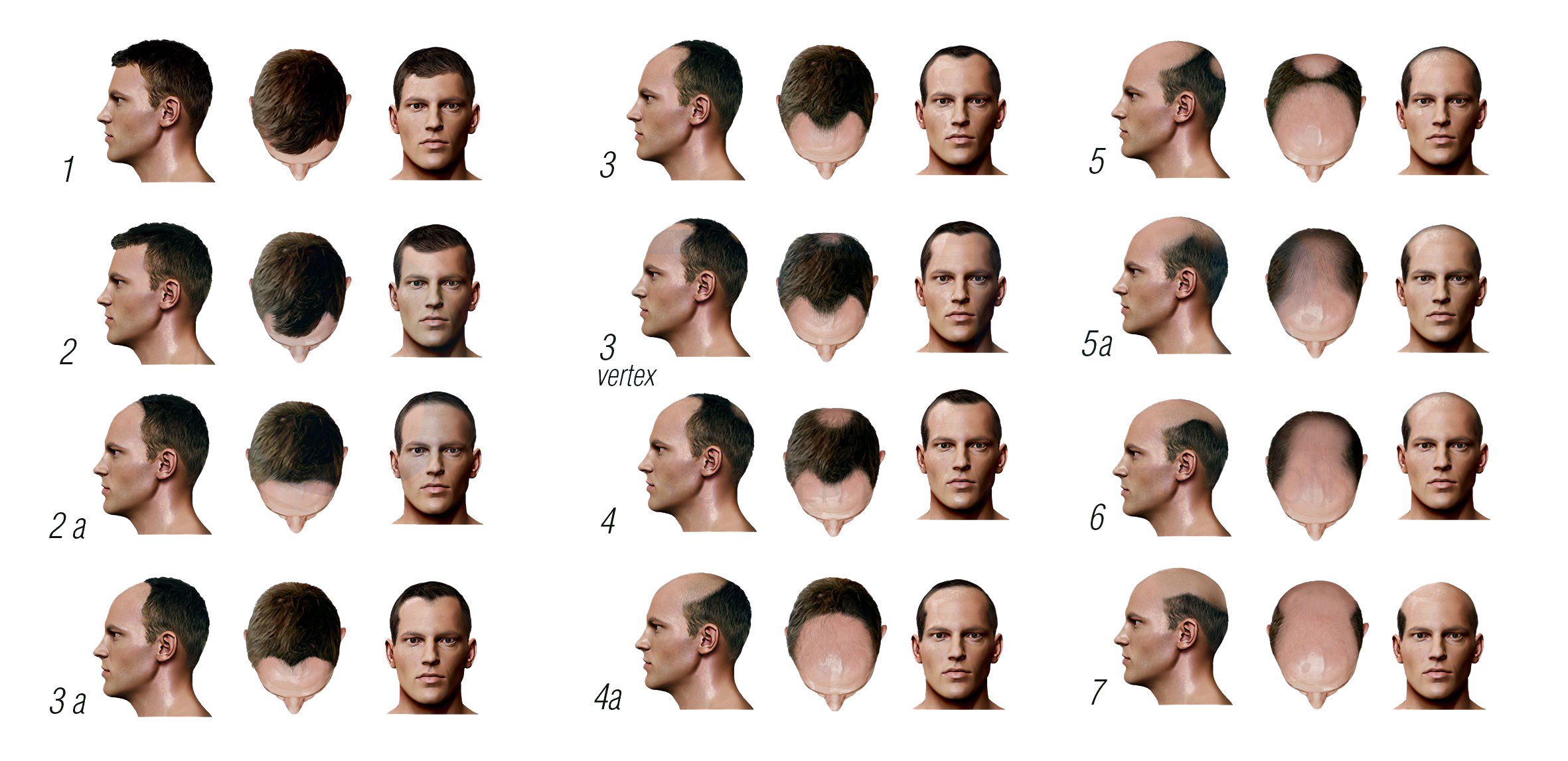
This is the most common type of hair loss globally and in Malaysia, driven by a sensitivity to the hormone DHT.
Causes and Genetic Factors
It is polygenic, meaning you can inherit the “baldness gene” from either side of your family. DHT (Dihydrotestosterone) shrinks the hair follicles until they only produce fine, “peach fuzz” hair.
Norwood Scale (Men)
The Norwood Scale classifies male baldness into seven stages, ranging from a slight receding hairline (Stage 1) to a completely bare crown (Stage 7).
Ludwig Scale (Women)
For women, the Ludwig Scale measures three grades of thinning, focusing on the widening of the center part line.
Early Signs and Progression
Watch for “miniaturization”—where individual hair strands look thinner and lighter than the hair on the back of your head.
Common Age of Onset in Malaysia
With modern lifestyle triggers, many Malaysian men now start seeing Stage 2 recession as early as their late teens or early 20s.
Alopecia Areata
This is an unpredictable autoimmune condition where the body attacks its own hair follicles.
Autoimmune Causes
The immune system mistakenly targets the hair bulb, causing it to shut down suddenly.
Patchy Hair Loss Symptoms
It typically manifests as smooth, coin-sized circular bald patches that appear overnight.
Alopecia Totalis and Universalis
Totalis: Complete loss of hair on the entire scalp.
Universalis: Total loss of all body hair, including eyebrows and eyelashes.
Triggers and Risk Factors
While genetic, it is often “activated” by extreme emotional stress or viral infections.
Telogen Effluvium
This is the “great shedding” that many Malaysians experience after a major life event.
Stress-Related Hair Loss
Physical or psychological stress pushes up to 30% of your hair into the resting (Telogen) phase prematurely.
Postpartum Hair Loss
Commonly occurring 3 months after giving birth, this is caused by the sudden drop in estrogen. Johns Hopkins Medicine notes that this is usually temporary and resolves within a year.
Illness, Surgery, and Post-COVID Hair Shedding
Severe fevers (like Dengue or COVID-19) are classic triggers for massive shedding roughly 90 days after the infection.
Nutritional Deficiencies and Crash Dieting
Rapidly losing weight or lacking Iron and Vitamin D can starve the hair bulb, leading to diffuse fall.
Anagen Effluvium
Unlike Telogen Effluvium, this occurs during the growth phase and is usually much faster.
Chemotherapy-Related Hair Loss
Chemo drugs target rapidly dividing cells, which includes hair follicles, leading to total hair loss within weeks.
Toxin and Medication-Induced Hair Loss
Exposure to certain heavy metals or high doses of Vitamin A can trigger this rapid shedding.
Hair Regrowth After Treatment
The good news is that hair usually begins to grow back 3 to 6 months after the toxic trigger is removed.
Traction Alopecia
This type is entirely preventable and is caused by physical tension.
Hairstyles Common in Malaysia That Cause Tension
Tight buns (sanggul), high ponytails, and very snug hijabs or underscarves can pull on the frontal hairline constantly.
Early Warning Signs
Look for small bumps (folliculitis) or “short” broken hairs around the temples and forehead.
Prevention and Reversibility
Switching to looser styles and silk underscarves can reverse the damage if caught before the follicle scars over.
Scarring (Cicatricial) Alopecia
This is a medical emergency for hair; once the follicle is gone, it’s gone.
Primary vs. Secondary Scarring Alopecia
Primary: The follicle is the direct target of the inflammation.
Secondary: The follicle is destroyed by a “bystander” event like a severe burn or infection.
Lichen Planopilaris
A rare inflammatory condition that causes permanent, patchy scarring and redness.
Frontal Fibrosing Alopecia
Commonly seen in post-menopausal women, this causes the hairline to recede linearly, often accompanied by the loss of eyebrows. The Mayo Clinic states that early diagnosis is vital to “lock” the remaining hairline in place.
Early Diagnosis Importance
Since this is permanent, seeing a specialist like Dr. Hair Malaysia for a biopsy is crucial to stop the inflammation before more hair is lost.
Hormonal Hair Loss
PCOS-Related Hair Loss
Polycystic Ovary Syndrome causes an excess of androgens. According to Sunway Medical Centre, PCOS affects roughly 12.6% of women in Malaysia, often leading to thinning on the scalp alongside unwanted facial hair.
Thyroid Disorders
Both hypothyroidism and hyperthyroidism can cause hair to become dry, brittle, and thin.
Menopause-Related Hair Thinning
Lower estrogen levels allow DHT to become more potent, mimicking male-pattern thinning in older women.
Fungal & Scalp Infection-Related Hair Loss
Tinea Capitis
A fungal “ringworm” of the scalp, most common in children, which causes itchy, scaly patches and broken hairs.
Seborrheic Dermatitis
In Malaysia’s humidity, excess yeast can cause “greasy” dandruff. If severe, the resulting inflammation can lead to temporary thinning.
Folliculitis
Inflammation of the hair follicles (often appearing as “scalp acne”) can damage the hair bulb if left untreated.
Nutritional & Lifestyle-Related Hair Loss
Iron Deficiency
Low ferritin levels (iron stores) are a primary cause of thinning in Malaysian women. The National Institutes of Health highlights that iron is a key co-factor for the enzyme that regulates hair growth.
Vitamin D & B12 Deficiency
Even in sunny Malaysia, many office workers have Vitamin D deficiencies, which can lead to dormant follicles.
Stress and Urban Lifestyle Factors in Malaysia
High cortisol levels from the “hustle” in cities like Petaling Jaya can disrupt the hair cycle, leading to chronic Telogen Effluvium.
Hair Loss in Specific Groups
Teenage Hair Loss: Often caused by extreme exam stress, poor diet, or early-onset genetics.
Postpartum Women: Usually peaks at 4 months; focus on nutrient replenishment.
Elderly Individuals: Naturally slower hair replacement cycles (Senescent Alopecia).
Hijab-Related Hair Concerns: Focus on “scalp breathing” time and avoiding wet hair under the scarf.
When to Seek Medical Diagnosis in Malaysia
Symptoms That Require Dermatologist Evaluation
Sudden patchy loss.
Scalp pain, itching, or burning.
Loss of eyebrows or eyelashes.
Diagnostic Tests
Clinics now use Digital Trichoscopy (high-magnification scalp analysis) and blood panels to check for underlying triggers.
Choosing a Hair Specialist or Dermatology Clinic in Malaysia
Ensure your clinic is registered with the Malaysian Medical Council and check for “LCP” (Letter of Credentialing and Privileging) certification for aesthetic procedures.
Frequently Asked Questions
Which Type of Hair Loss Is Most Common in Malaysia?
Androgenetic Alopecia (genetic thinning) is the most frequent, followed closely by Telogen Effluvium (stress/illness-related).
Can Hair Loss Be Reversed?
Non-scarring types like Telogen Effluvium and early-stage Androgenetic Alopecia can often be reversed or significantly improved with hair regrowth treatment.
How to Identify Your Type of Hair Loss?
A professional scalp analysis is the only way to be 100% sure, as many types look similar to the naked eye.
Is Hair Loss Hereditary?
Yes, the vast majority of pattern baldness is inherited, but lifestyle and environment determine when and how fast it happens.
Key Takeaways on Managing Hair Loss in Malaysia
Identify Early: Don’t wait for “shiny” bald spots.
Tropical Care: Manage scalp oil and humidity to avoid inflammation.
Holistic Fix: Combine medical treatments with a high-protein diet and stress management.